The #1 Pricing Mistake Contractors Make (And How to Fix It)
If you have been in the trades for any length of time, you have probably heard this from another contractor: “I bid the job right and still lost money.” It happens constantly. And in almost every case, the root cause is the same mistake — pricing based on what you think the market will bear instead of what it actually costs to do the work profitably.
This is the #1 pricing mistake residential contractors make, and it is silently draining your business.
The Mistake: Pricing by Feel
Not sure where your money's leaking? Take the free 5-question scorecard and I'll show you the first system to plug it.
Take the free scorecard →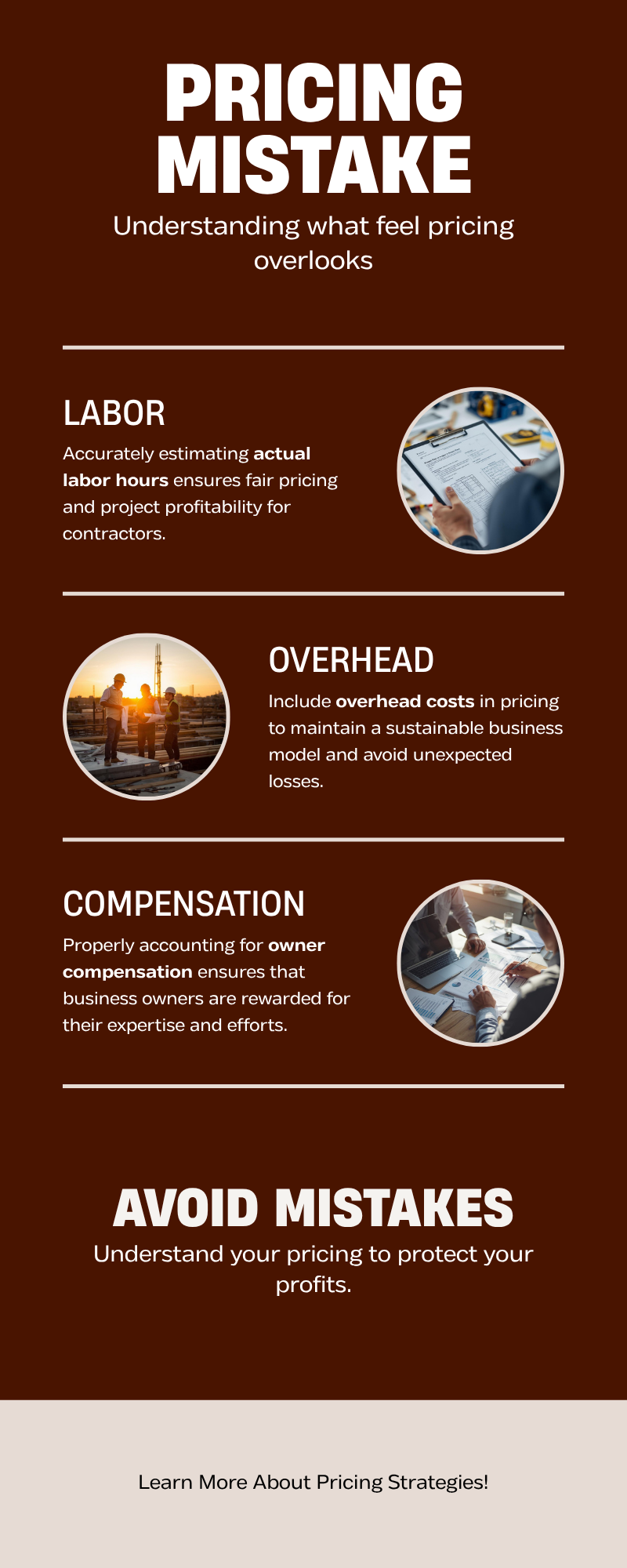
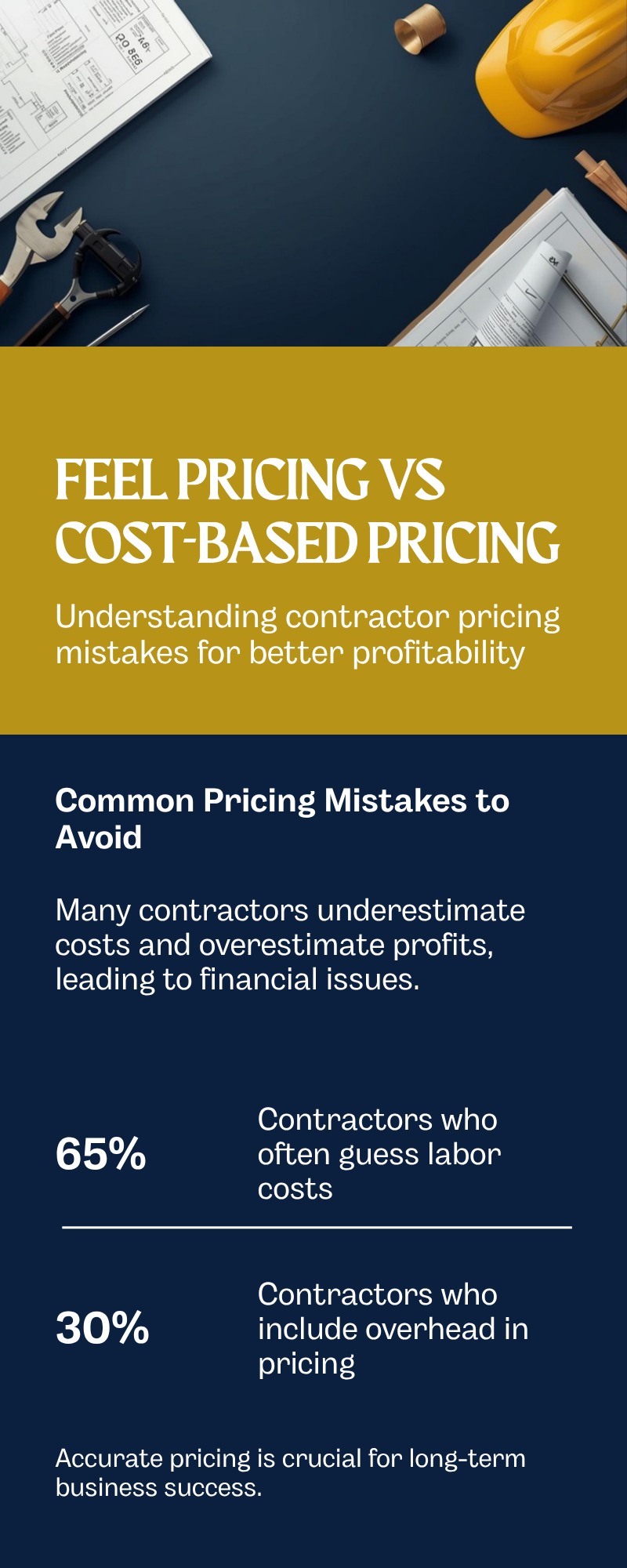
Most contractors learn to price jobs by watching how other contractors price jobs. They do a mental walk-through of the work, add up materials in their head, slap on a percentage “for their time,” and call it a number. If the client pushes back, they lower the number. If they win the job, they feel good — until the final invoice shows they barely broke even, or worse.
Pricing by feel is essentially guessing. And when you guess on a $40,000 remodel, a few wrong assumptions can eat your profit margin entirely.
Here is what “feel pricing” typically misses:
- Actual labor hours (not the optimistic estimate, the real one)
- Overhead: trucks, insurance, phone, software, office time, advertising
- Your own pay as a business owner (separate from job labor)
- Subcontractor coordination time
- Material price fluctuations
- Callbacks and warranty work
When you leave any of these out, you are not running a business — you are funding someone else’s renovation.
The Fix: Build a Cost-Based Pricing Foundation
The fix is not complicated, but it does require discipline. You need to know your numbers before you ever talk to a client.
Step 1: Calculate your true hourly cost
Start with what it costs your business to exist for one hour. Take your monthly overhead (insurance, vehicle, tools, office, phone, software, advertising — everything), divide by your billable hours per month, and you have your overhead cost per hour. Add your desired owner compensation, then your direct labor cost, and you have a real hourly cost — before you make a single dollar of profit.
Most contractors who do this exercise are shocked. Their “feel” number is often 20–40% below their actual cost.
Step 2: Price materials with a markup, not cost-plus
If you are passing materials to clients at cost, you are working for free. Materials require purchasing time, carrying risk, coordinating delivery, and managing returns. A standard materials markup — typically 20–35% depending on your market — compensates you for that work and protects you when prices change between quote and purchase.
Step 3: Add your profit margin last, deliberately
Profit is not what is left over. Profit is what you plan for. Set a minimum acceptable profit margin — most healthy contracting businesses target 10–20% net — and build it into every quote before you submit it. This is the money that lets you buy a new truck, hire a second crew, or survive a slow quarter.
What Changes When You Price Right
When you stop pricing by feel and start pricing from a real foundation, something surprising happens: you do not win every job anymore — but the jobs you do win actually make money. You stop dreading the final invoice. You start building real cash reserves. And you have the confidence to walk away from clients who want to negotiate you into a loss.
Profitable pricing is not about being the cheapest option in the room. It is about knowing your value, covering your costs, and making sure every job moves your business forward.
If you are ready to build the pricing foundation your business deserves, start with our free Profit Audit at belkiscruz.com/profit-audit. In 10 minutes, you will see exactly where your pricing is leaving money on the table.
—
Belkis Cruz Consulting helps residential contractors build profitable businesses through clear pricing systems, estimating frameworks, and real-world tools.
Free Contractor Pricing Checklist
Stop guessing on every bid. Get the checklist + weekly tips to grow your profit.